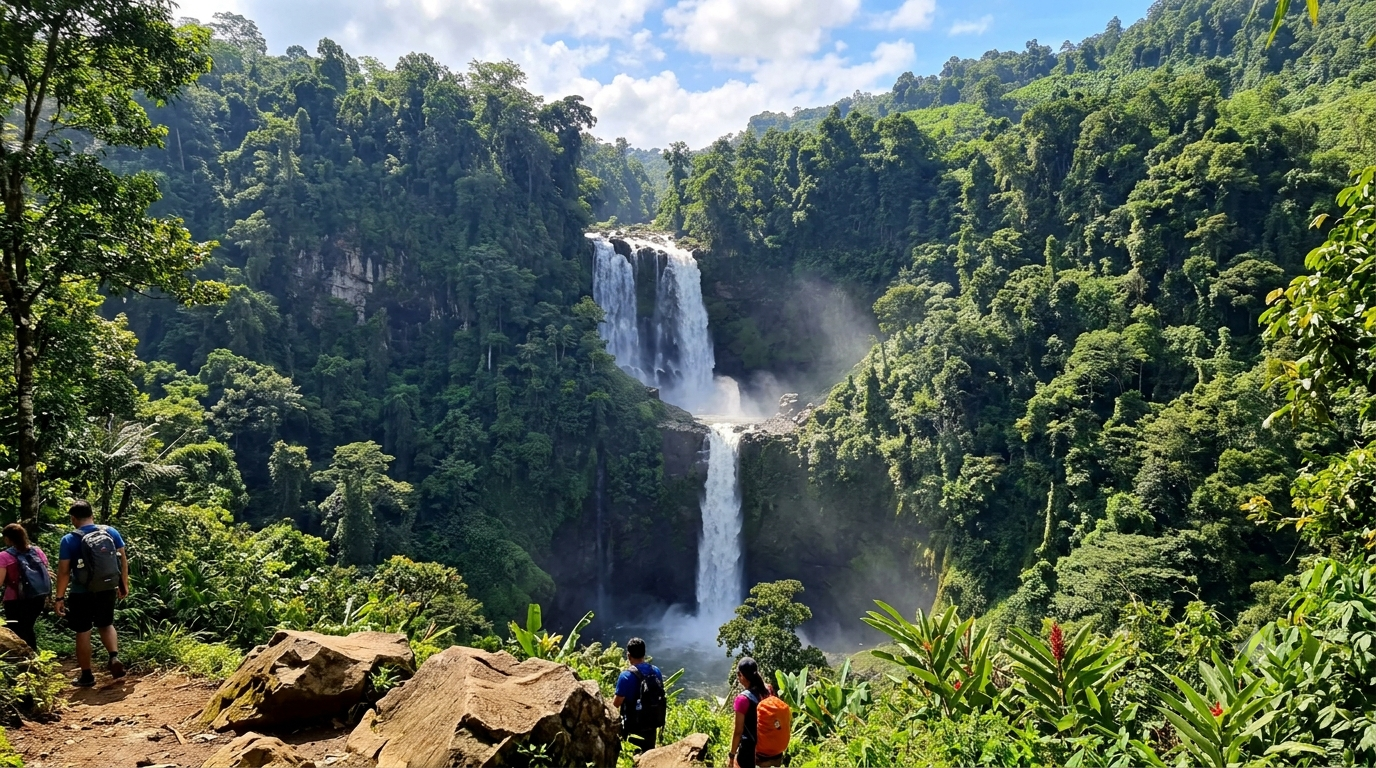
Deep in the highlands of Talakag, on the edge where Bukidnon meets Lanao del Norte, a two-tiered wall of water drops nearly 270 meters — about 870 feet — into a misty gorge. This is Mindamora Falls, widely regarded as the second-highest waterfall in the Philippines, and one of the most breathtaking sights our province shares with its neighbors. Whether you’re a visitor chasing hidden wonders or a local who has only ever heard the name, here’s what makes Mindamora worth the journey — and what you need to know before you go.
One Waterfall, Three Names
Ask around and you’ll hear Mindamora called by different names. To many travelers it’s Mindamora Falls; the Higaonon and other lumad residents near Sitio Dagunalan know it as Bayug Falls; and on the Iligan side it’s often called Limunsudan Falls. They’re all the same giant. The falls straddles the boundary between Barangay Lantud in Talakag, Bukidnon and Sitio Limunsudan in Barangay Rogongon, Iligan City, which is why more than one place lays claim to it. On the Bukidnon side, it falls under the care of the municipality of Talakag.
A Sacred Place, Not Just a Scenic One
Before you picture a swimming trip, know this: Mindamora is sacred ground to the local Indigenous community. Part of every visit is a short ritual led by the community’s Datu, and travelers are expected to take part respectfully. This isn’t a formality added for tourists — it’s a big reason the place has stayed as unspoiled as it has. Come with humility, follow your guide’s lead, and treat the site the way the locals do: with reverence.
How to Get to Mindamora Falls
Most trips start from Cagayan de Oro City. From there, head to Carmen Public Market and catch a van to Talakag — roughly an hour, at around 100 pesos per person. Once in Talakag, you’ll hire a habal-habal or bao-bao to reach the receiving area, since there’s no direct public transport to the falls themselves. Coming from Malaybalay City, it’s easiest to route through Cagayan de Oro first. From Davao City, buses bound for Kalilangan pass through the area before you transfer toward Talakag. If you’re driving from Cagayan de Oro, take the Sayre Highway toward Bukidnon and follow the signs for the Mindamora, Bayug, or Limunsudan Falls Receiving Area — expect rough road on the final stretch, and budget roughly one and a half to two hours. One practical note: there’s no cell signal at the site, though a small store near the receiving area sometimes offers piso-wifi, so tell someone your plans before you lose service.
Fees, Guides, and the Datu’s Ritual
A local guide is required, and a few small fees are collected on site — typically a guide fee and a ritual fee for the Datu’s ceremony. Reported amounts vary between sources and seasons, so treat them as approximate and bring extra cash — there are no ATMs out here. Reaching the upper tier usually costs a small additional fee on top. Carry small bills, and a coin or two for the ritual.
The Trek: Short but Steep
The walk to the viewing deck is short — often just 10 to 15 minutes from the jump-off — and rewards you with a full view of both tiers. Getting down to the base is harder: a steep descent of roughly 30 to 45 minutes that turns slippery after rain. It’s a genuine little workout, so wear proper footwear. Note that the pools aren’t for swimming; the current is powerful and the site is treated as sacred. The reward is the mist on your face and the roar of one of the country’s tallest waterfalls up close.
When to Go
The dry months, roughly November to May, make for the safest footing on the trail. The rainy season brings the falls to their thunderous, full-volume best — but mist and cloud can hide the view from the deck, and the trails get treacherous. Weekdays are quieter than weekends.
Check Before You Go
This is the important one. Access to Mindamora has been intermittent — travelers have reported temporary closures tied to weather, safety, and ancestral-domain matters, including reports that the falls were closed to the public in early 2026. Because the site sits under local and Indigenous jurisdiction, it can open and close on short notice. Contact the Talakag tourism office or a local guide before you set out, so you don’t make the long trip only to be turned away.
Mindamora Falls is the kind of place that stays with you — not just for its scale, but for the quiet it asks of you. It has survived because the people who call it sacred have protected it. Go as a guest: take part in the ritual, follow your guide, carry your trash back out, and leave the falls exactly as you found them. Do that, and you’ll understand why locals speak of Mindamora with something closer to respect than pride.